AI Law Tracker: A Dashboard for Compliance Deadlines
A new site tracks AI regulations across US states and the EU, aggregating deadlines, bill statuses, and news for engineers building compliant systems.
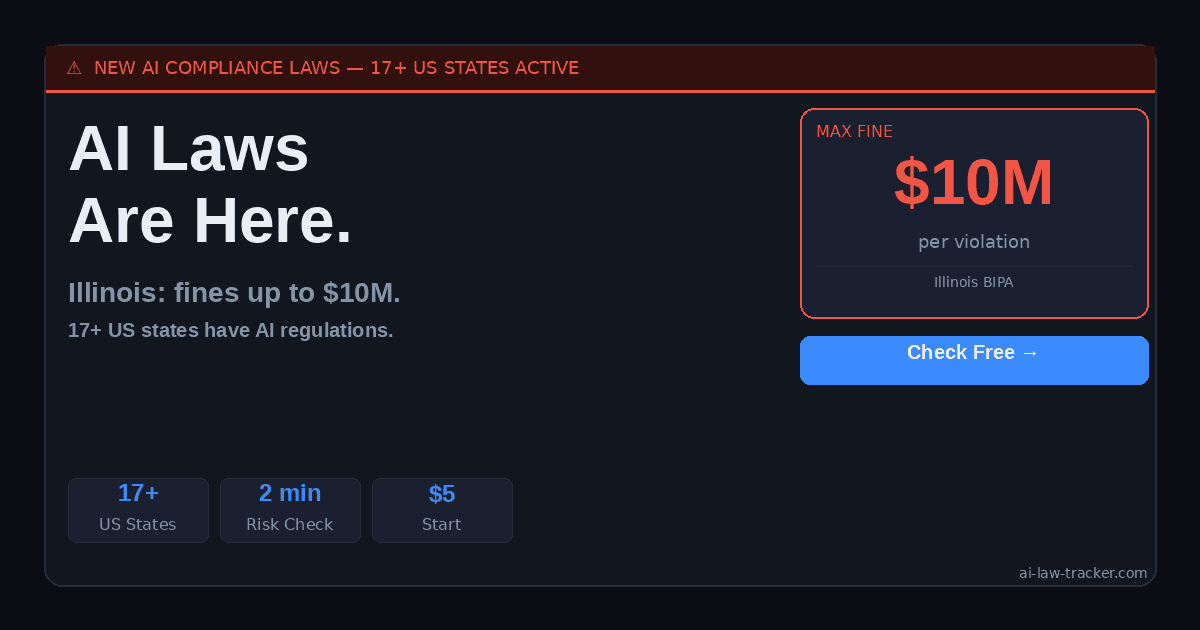
AI regulation is accelerating, and keeping up with compliance deadlines across jurisdictions is becoming a full-time job for engineering teams. A new site, AI Law Tracker, aims to simplify this by aggregating key AI laws, their enforcement dates, and the latest legislative news from all 50 US states and the EU.
Key Deadlines at a Glance
The tracker lists major AI laws with their effective dates, linking directly to primary government sources. Notable entries include:
- California SB 942 (AI Transparency Act) — enacted, bites August 2, 2026.
- EU AI Act (Regulation (EU) 2024/1689) — in effect, main obligations from August 2, 2026.
- Colorado SB 24-205 (Colorado AI Act) — enacted, effective January 1, 2027.
- New York S6953B (RAISE Act, frontier-AI safety) — enacted, effective January 1, 2027.
- Illinois HB 3773 (AI in Employment) — in effect from January 1, 2026.
Each entry links to the official bill text, so engineers can verify requirements without relying on third-party summaries.
News and Federal Tracking
Beyond deadlines, the site aggregates AI regulation news from sources like Forbes and The National Law Review. Recent stories cover Colorado’s AI psychotherapy law, New York’s data center moratorium, and California’s push for human-taught K-12 education. The federal section tracks bills in Congress, such as HR 9706 (facial recognition for wagering platforms) and HR 9715 (AI in arbitration), with latest actions from July 2026.
Practical Tools for Engineers
AI Law Tracker also offers a free risk snapshot tool — answer four questions to see which laws apply to your business and get prioritized action items. No signup required. For teams building AI products, this is a pragmatic way to cut through the noise and focus on compliance where it matters.
While the site is clearly aimed at legal and compliance teams, engineers responsible for AI systems should bookmark it. Knowing whether your model needs to pass a bias audit in New York or disclose AI use in California is no longer optional — it's a hard requirement with real penalties.
Source: AI Law Tracker
Discussion
0 Comments
Be the first to start the discussion.