End of a Biological Rule: Complex Life That Fixes Its Own Nitrogen
A decades-long hunt for a missing nitrogen-fixing bacterium led to the discovery of a new organelle — the nitroplast — inside an alga, rewriting a fundamental rule of biology.
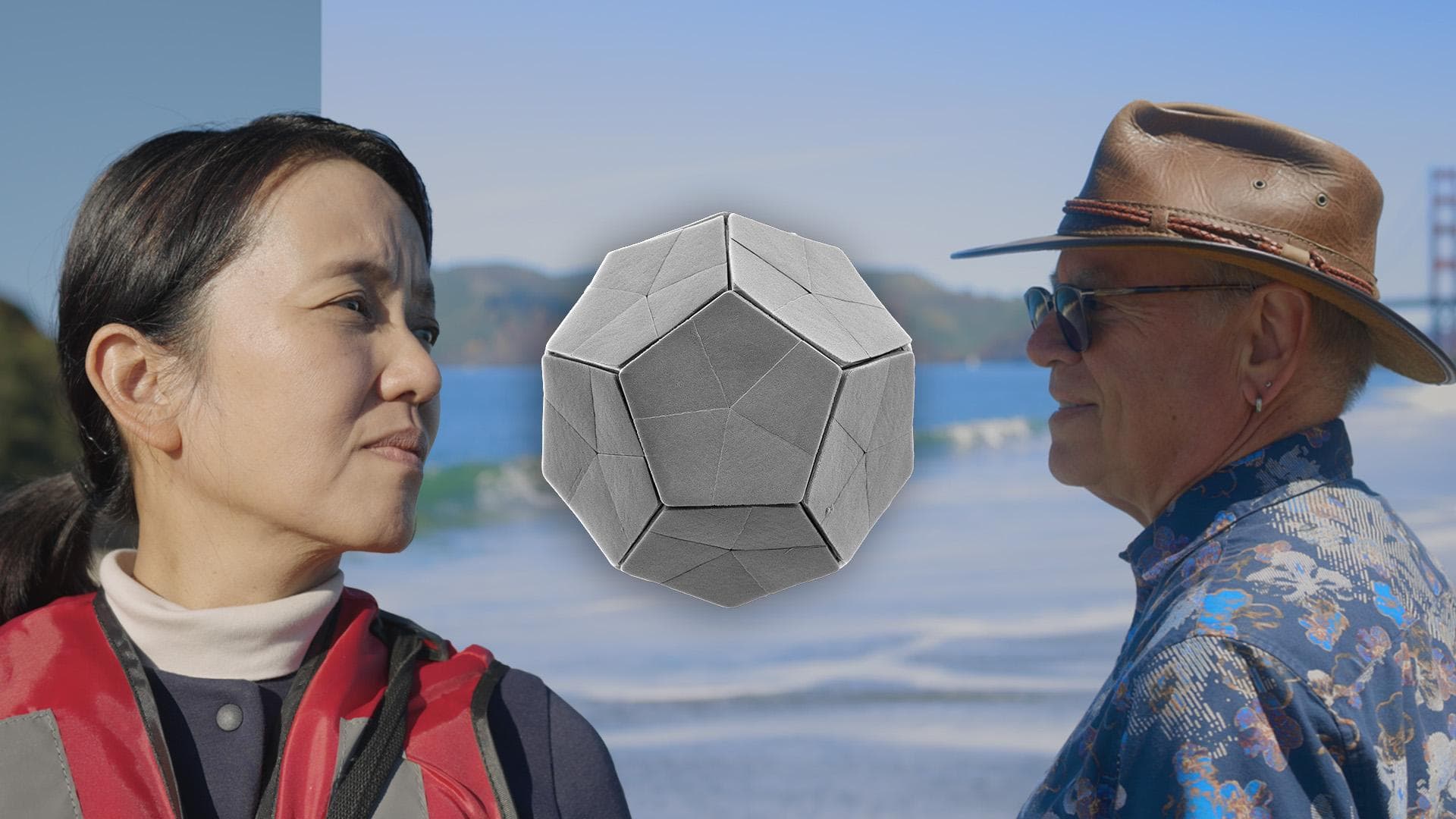
For decades, biology textbooks stated that only simple bacteria and archaea could fix atmospheric nitrogen. Complex organisms — plants, animals, fungi — were locked out. That rule just got broken.
Two independent researchers, oceanographer Jon Zehr and phycologist Kyoko Hagino, spent over twenty years chasing the same mystery from opposite ends of the Earth. Zehr kept finding DNA signatures of a nitrogen-fixing bacterium in seawater samples but could never see the organism under a microscope. Hagino was obsessed with a beautiful, jewel-like alga called Braarudosphaera bigelowii that refused to grow in culture — until she added tokoroten, a traditional Japanese seaweed jelly, to the medium.
The two threads converged when Zehr realized his invisible bacterium was living inside Hagino's alga. Not as a symbiont, but as an integrated organelle — now called the nitroplast. This is the first known example of a nitrogen-fixing organelle in a eukaryotic cell, and it overturns a core tenet of cell biology.
How the nitroplast works
The bacterium, a cyanobacterium related to UCYN-A, has lost roughly 80% of its genome and cannot survive on its own. It lives inside the alga, fixing nitrogen in exchange for a protected environment. The alga provides carbon and energy; the bacterium supplies bioavailable nitrogen. This arrangement is so tight that the bacterium is now considered an organelle, much like mitochondria or chloroplasts.
Genomic analysis shows the nitroplast imports proteins encoded by the host's nuclear genome — a hallmark of organelle status. The discovery was confirmed by electron microscopy and published in Cell and Science in 2024.
Why this matters for engineering
The immediate implications are agricultural. Synthetic nitrogen fertilizer production consumes ~1-2% of global energy and causes massive environmental damage (dead zones, greenhouse gas emissions). If the nitroplast's mechanism can be understood and transferred — or if the organelle can be engineered into crop plants — we could one day grow self-fertilizing wheat, rice, or corn.
That's a long shot, but the discovery opens a new front in synthetic biology: engineering organelles rather than just pathways. For infrastructure-minded readers, think of it as a distributed, self-healing nitrogen pipeline that operates at the cellular level. No cloud, no CI/CD — just evolution's own serverless architecture.
What's next
Zehr and Hagino's teams are now working to characterize the nitroplast's protein import machinery and its integration with host metabolism. The race is on to see if the same trick appears in other algae — or if it can be coaxed into existence in plants.
This is the kind of foundational science that, if it pans out, will reshape agriculture, fertilizer logistics, and global carbon budgets. For now, it's a reminder that the most interesting infrastructure isn't always in a data center.
Source: Grist
Discussion
0 Comments
Be the first to start the discussion.