LLM-Native Extensible Software: The Web's Next Big Pattern
Jeremy Morrell argues LLMs turn every user into a potential developer, making extensible web software the next big opportunity—with Cloudflare's Dynamic Workers as a key enabler.
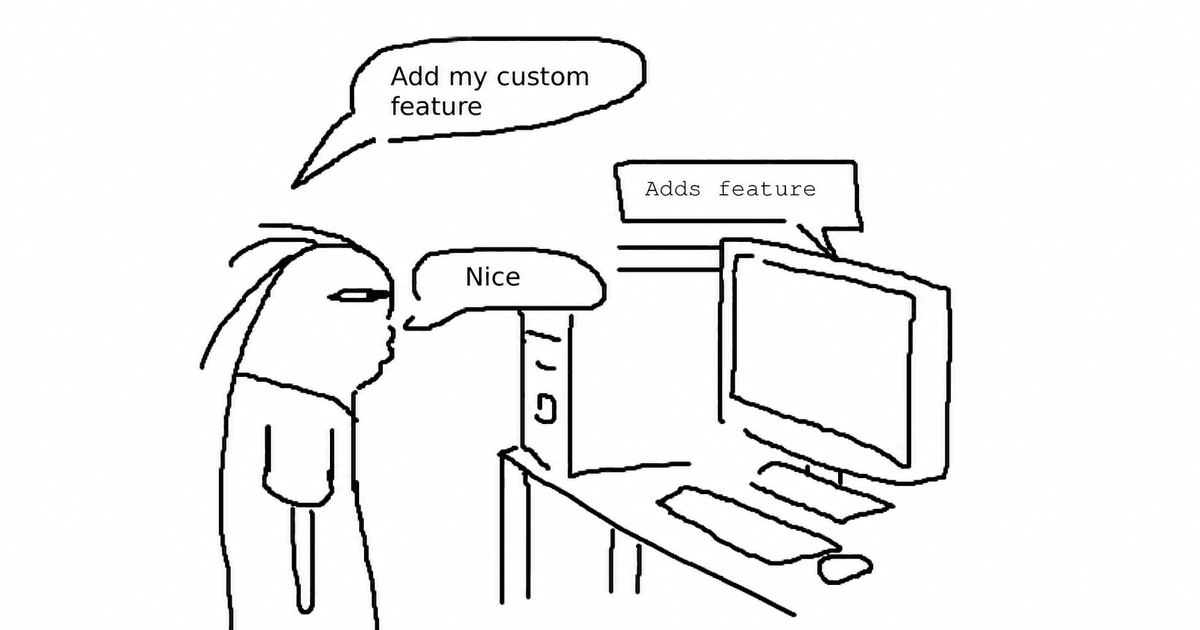
Most web software is static. Developers build features for the largest user groups, leaving a long tail of unmet needs. LLM-assisted coding is changing that, letting users create custom tools for themselves. This is the rise of 'Software for One'—personal apps that fit individual workflows without enterprise complexity.
Y Combinator's Pete Koomen calls this 'Small Software,' and Jeremy Morrell, a Cloudflare engineer, sees a bigger pattern: LLM-native software—a battle-tested core that users can extend just by asking. Pi is a prime example, with stable hooks for tools, commands, events, and UI, turning requests into small TypeScript extensions that reload in place.
The key insight: your users have suddenly acquired the ability to speak code into existence. Most existing software can't leverage this. The web, the most successful distribution system, shouldn't be left behind.
What would this look like?
Instead of webhooks, which require building and operating separate services, users want to say: 'When I attach this tag, run my function' or 'Do this on a daily cron.' They want to tell their read-it-later app to send long articles to their e-reader, or have an agent summarize new arxiv papers weekly.
LLMs lower the cost of authoring extensions, and modern sandbox primitives lower deployment costs and provide security boundaries. This enables a solid, accountable core with safe user extensions.
AI Agents
Pi, DeepSeek, and opencode are experimenting here. Pi avoids bloating its core by providing hooks for tools, commands, events, and UI, letting the ecosystem absorb the long tail of ideas. But the audience is small—you need to run custom software locally, and in corporate environments, that's a security concern. Accountants, doctors, and lawyers need agents tailored to their domains without becoming developers.
Internal Corporate Platform
Companies have tons of data, and employees need custom views and automations. Vibe-coding and deploying to a PaaS creates maintenance, access control, and compliance nightmares. Morrell suggests a platform where data access is handled by an internal team, no auth tokens can leak, and compliance is checked—basically Cloudflare OS.
Support Platform
Support engineers dig through dashboards and logs. Extensions could surface relevant data for a ticket, kick off investigation agents, or add buttons for common tasks—shareable with the team.
Observability Platform
Observability tools have converged on the same features: log search, trace waterfalls, dashboards. But modern systems are stateful and dynamic, with agents running for hours or days. Trace spans are a great source of truth, but users should be able to experiment with custom visualizations.
Morrell argues Dynamic Workers are a particularly good fit for this model, though he covers alternatives. The future is software that users can shape—safely, on the web.
Your users have suddenly acquired the ability to speak code into existence. Most existing software can’t leverage this. Pi leans into it.
Source: Jeremy Morrell
Discussion
0 Comments
Be the first to start the discussion.