SICP Lectures: The Original Computer Science Masterclass
MIT's legendary SICP lectures by Abelson and Sussman are now freely available online—a timeless deep dive into the fundamentals of programming.
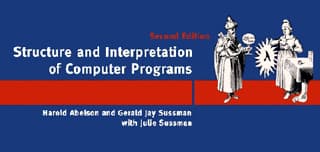
MIT OpenCourseWare has released the complete video lectures for 6.001: Structure and Interpretation of Computer Programs (SICP), taught by Hal Abelson and Gerald Jay Sussman. Recorded in 1986 for Hewlett-Packard employees, these twenty professionally produced videos cover the entire course and are available under a Creative Commons license.
What's in the Lectures
The lectures follow the first edition of SICP and cover the core ideas that made the course legendary: abstraction, recursion, higher-order procedures, compound data, streams, metacircular evaluators, logic programming, register machines, and compilation. Each topic is presented with a mix of mathematical rigor and practical Lisp code.
Why This Matters Today
SICP isn't just a historical artifact—it's a foundational text for anyone who wants to understand how programming languages work under the hood. The lectures teach you to think about computation in terms of procedures and processes, not just syntax. Concepts like the substitution model for procedure application, the metacircular evaluator, and lazy evaluation via streams are as relevant now as they were in 1986.
For engineers working with modern languages like Rust, JavaScript, or Python, the patterns in SICP—closures, continuations, message passing—show up everywhere. The lectures also cover topics like generic operators and pattern matching that directly inform today's functional programming and DSL design.
Key Topics Covered
- Overview and Introduction to Lisp
- Procedures and Processes; Substitution Model
- Higher-order Procedures
- Compound Data
- Henderson Escher Example (pictorial recursion)
- Symbolic Differentiation; Quotation
- Pattern Matching and Rule-based Substitution
- Generic Operators
- Assignment, State, and Side-effects
- Computational Objects
- Streams (Part 1 & 2)
- Metacircular Evaluator (Part 1 & 2)
- Logic Programming (Part 1 & 2)
- Register Machines
- Explicit-control Evaluator
- Compilation
- Storage Allocation and Garbage Collection
Each lecture is roughly an hour long and includes live coding and whiteboard explanations. The videos are available directly from MIT OpenCourseWare or via the CSAIL mirror.
If you've ever wondered what makes a programming language tick, or wanted to build your own interpreter, these lectures are the best place to start. They're also a great refresher for seasoned engineers who want to revisit first principles.
Discussion
0 Comments
Be the first to start the discussion.