Suica at 200ms: How Japan's IC Transit Card Beat the Server Round-Trip
The story of Suica is a masterclass in edge computing: a battery-free card that completes a full fare transaction in under 200ms by keeping everything local. Here's how Sony and JR East pulled it off—and almost didn't.
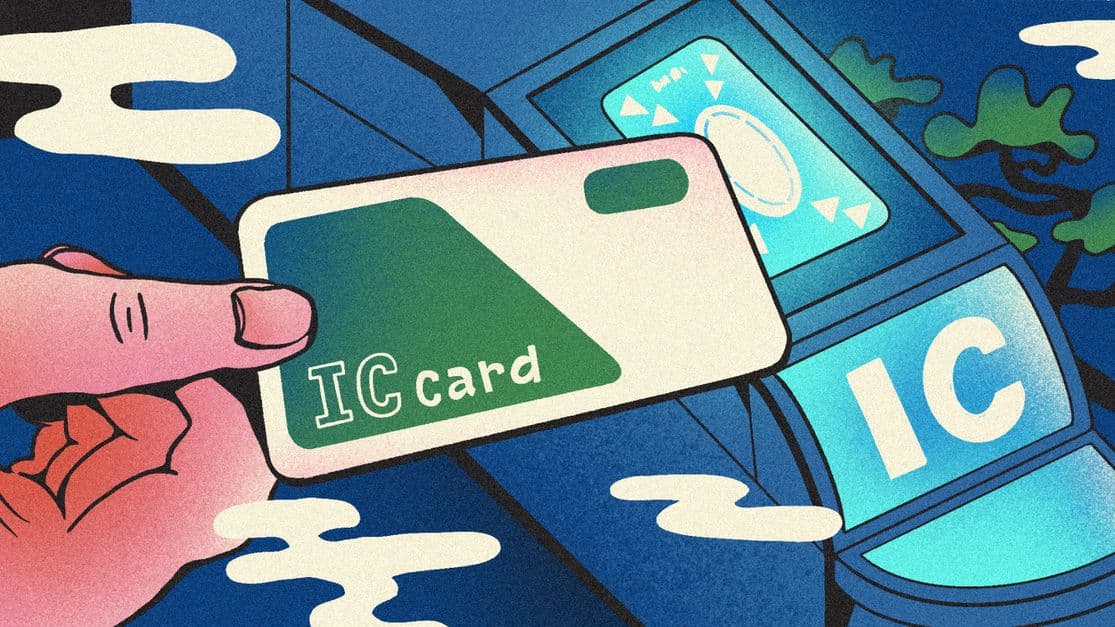
Every time a commuter in Tokyo taps a Suica card against a station gate, a complete financial transaction—authentication, fare calculation, balance deduction—executes in under 200 milliseconds. No battery, no server call, no network dependency. That's not just a neat trick; it's a design decision that has shaped how millions of people move through the world's busiest transit network.
The card is the database
Unlike most payment systems, Suica stores both the card ID and the balance directly on the chip. The gate's reader emits an electromagnetic field that powers the card just long enough to complete the exchange. The card and reader mutually authenticate, generate a fresh encryption key, and rewrite the balance—all locally.
Why not sync with a central server on every tap? Because at Tokyo's scale, that would be catastrophic. A server round-trip would add latency, and any network hiccup—packet loss, downtime, congestion—would bring the gates to a standstill during rush hour. Instead, gates sync transaction logs to central servers periodically, not in real time.
The road to Suica: from rejection to redemption
Before Suica, Tokyo's stations were a bottleneck of human ticket-punchers. JR East, privatized in 1987, wanted to modernize but was skeptical of unproven contactless IC technology. Sony pitched FeliCa, its proprietary contactless system, but JR East said no—the tech wasn't fast or reliable enough.
Sony nearly abandoned FeliCa until Hong Kong's Octopus card came calling. Sony built a card with a 10cm read range and 100ms response time, won the bid, and Octopus launched in 1997 to massive success. That proof of concept brought JR East back to the table.
The 200ms gauntlet
JR East set a non-negotiable requirement: the entire transaction—from card detection to fare calculation to balance deduction—had to complete in under 200 milliseconds. That's tighter than it sounds. Octopus's 100ms target only covered radio communication; the full end-to-end transaction reportedly takes around 300ms. Suica's 200ms had to cover everything.
To hit that target, the card and reader had to handle everything locally. The gate emits an electromagnetic field, the card wakes up, they authenticate, compute the fare, update the balance—all in the split second the card is in range. Sony also extended the reader's communication range to 85mm, double that of rivals, so passengers could walk through without stopping to line up the card perfectly.
Almost killed by a UI problem
Early prototypes were a disaster. Nearly half of testers couldn't get through the gates. An executive complained of a "20% batting average." Leadership was ready to pull the plug. The fix wasn't in the chip—it was in the reader's design. The flat, unmarked panels gave no hint of how to use them. People swiped too fast or hovered too high, like scanning a barcode. A redesign that clearly signaled the tap motion saved the project.
The lesson for modern engineers
Suica's architecture is a textbook case for edge computing. It's not about avoiding servers; it's about knowing when a server round-trip is a liability. For low-latency, high-throughput, mission-critical interactions, local processing with eventual sync can be the difference between a smooth commute and a station-wide meltdown.
As we build for IoT, payments, and real-time systems, Suica's 200ms constraint is a reminder: sometimes the best network call is the one you don't make.
The card and reader handle everything between themselves. Server sync later. That's the difference between a smooth commute and a station-wide meltdown.
| Metric | Suica | Octopus |
|---|---|---|
| Read range | 85mm | 10cm (100mm) |
| Radio response time | Not specified | <100ms |
| Full transaction time | <200ms | ~300ms |
| Server dependency | None (local only) | None (local only) |
Discussion
0 Comments
Be the first to start the discussion.