The Grid That Launched a Thousand Data Centers: BPA's Columbia River Power Story
How the Bonneville Power Administration's 1930s grid built on Columbia River dams laid the technical and political foundation for the Pacific Northwest's data center boom, including AWS's us-west-2.
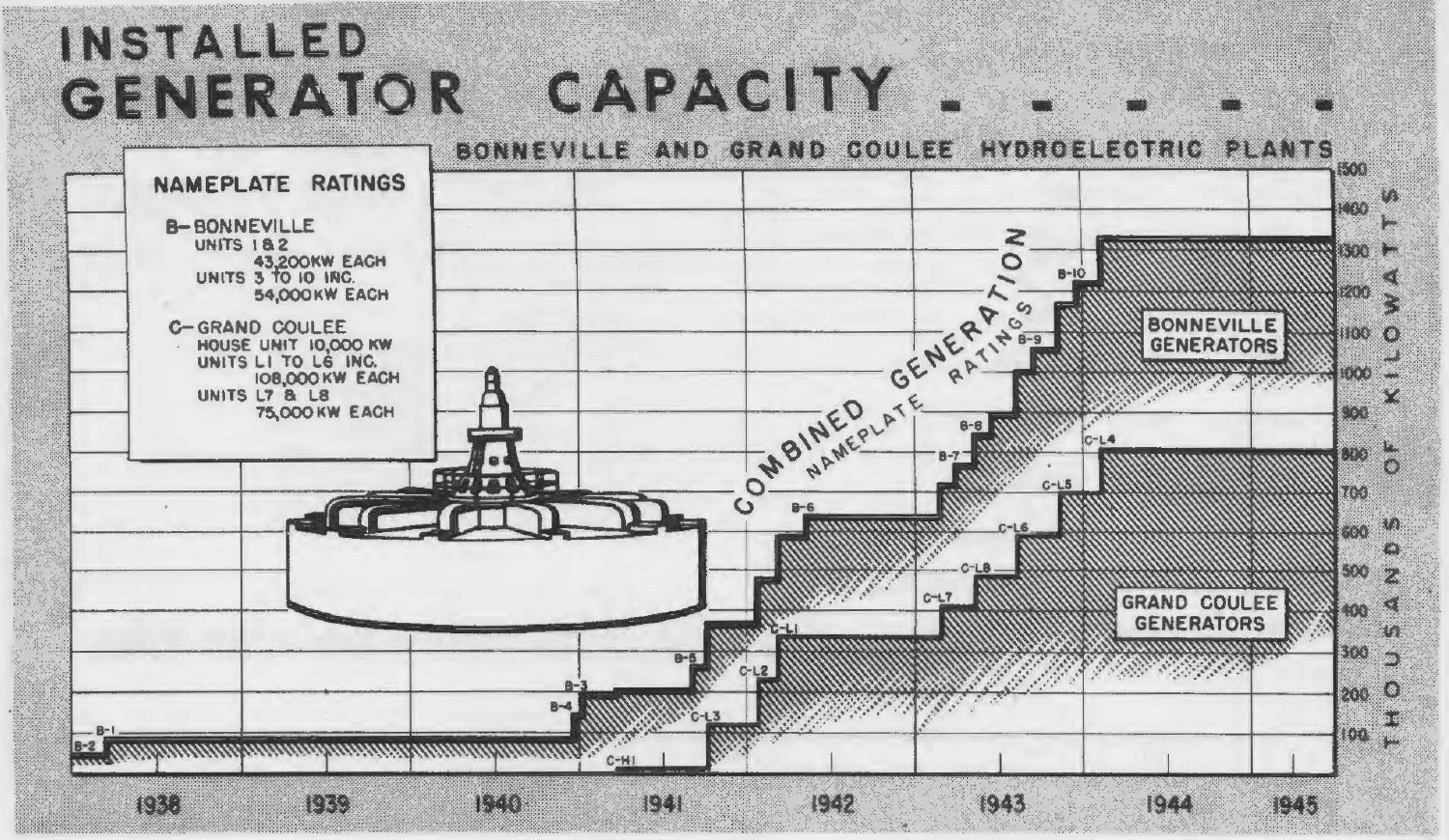
If you've ever wondered why AWS picked The Dalles, Oregon for us-west-2, the answer isn't just cheap land or cool air. It's a 1930s federal power project that turned the Columbia River into the world's most consequential hydroelectric corridor. The Bonneville Power Administration (BPA) didn't just build dams; they invented the modern regional grid, pioneered long-distance high-voltage transmission, and created the electrical abundance that now powers a huge chunk of the internet.
The Religious War Over Water
The U.S. Army Corps of Engineers and the Bureau of Reclamation spent decades fighting over who got to dam the West. The Corps won the Columbia. Starting in the 1930s, they built Bonneville (1.2 GW) and Grand Coulee (eventually 7 GW), along with a cascade of other dams. The result was a flood of electricity—far more than local farms and towns could use. That surplus needed a distribution network, and Congress chartered the BPA in 1938 to build it.
The Master Grid: First Integrated Regional Power Network
BPA's first administrator, J. D. Ross, proposed a ring-shaped 230 kV transmission network connecting the dams to Portland, Seattle, Spokane, and beyond. By 1945, it covered 3,000 circuit miles. This was the first integrated regional grid in the U.S., and it pioneered the market-based electricity pricing, independent system operators (ISOs), and pooling agreements that underpin modern electrical infrastructure. The entire Western Interconnection crystallized from Bonneville's switch yard.
Telecom on the Power Lines
Coordinating a grid spread across remote substations required communication. BPA evaluated three options: leased telephone lines, carrier current (superimposing voice signals onto the transmission lines themselves), and radio. They used all three. Carrier current equipment from Lenkurt modulated multiple telephone circuits onto the power lines using frequency division multiplexing, letting operators monitor and control substations in real time. This was an early form of telemetry and teleoperation, decades before the internet.
From Aluminum to AWS
The BPA's "postage stamp rate"—equal pricing for rural co-ops and city utilities—sparked an industrial revolution. The Columbia Gorge produced a third of U.S. aluminum through the 1970s, feeding Boeing and aerospace. Today, that same cheap, abundant power attracts data centers. AWS's us-west-2 sits near Bonneville, The Dalles (1.8 GW), John Day (2.2 GW), and McNary (1.1 GW) dams. The grid built for aluminum smelters now powers cloud compute.
Lessons for Modern Infrastructure
The BPA story is a reminder that foundational infrastructure decisions have multi-decade tailwinds. The technical challenges they solved—long-distance high-voltage transmission, grid-scale telemetry, equitable power distribution—are still relevant. And the political choice to keep power public and cheap created an economic moat that private utilities couldn't match. For engineers building the next generation of distributed systems, the lesson is clear: the physical layer matters, and government can sometimes build it better.
Discussion
0 Comments
Be the first to start the discussion.