The Vanished Genius CTO: Lee Holloway, the Architect Behind Cloudflare's Core Tech
Lee Holloway, Cloudflare's co-founder and the engineer behind its Anycast network and Cell architecture, was forced out by frontotemporal dementia. This is the story of his technical legacy and the tragedy that ended his career.
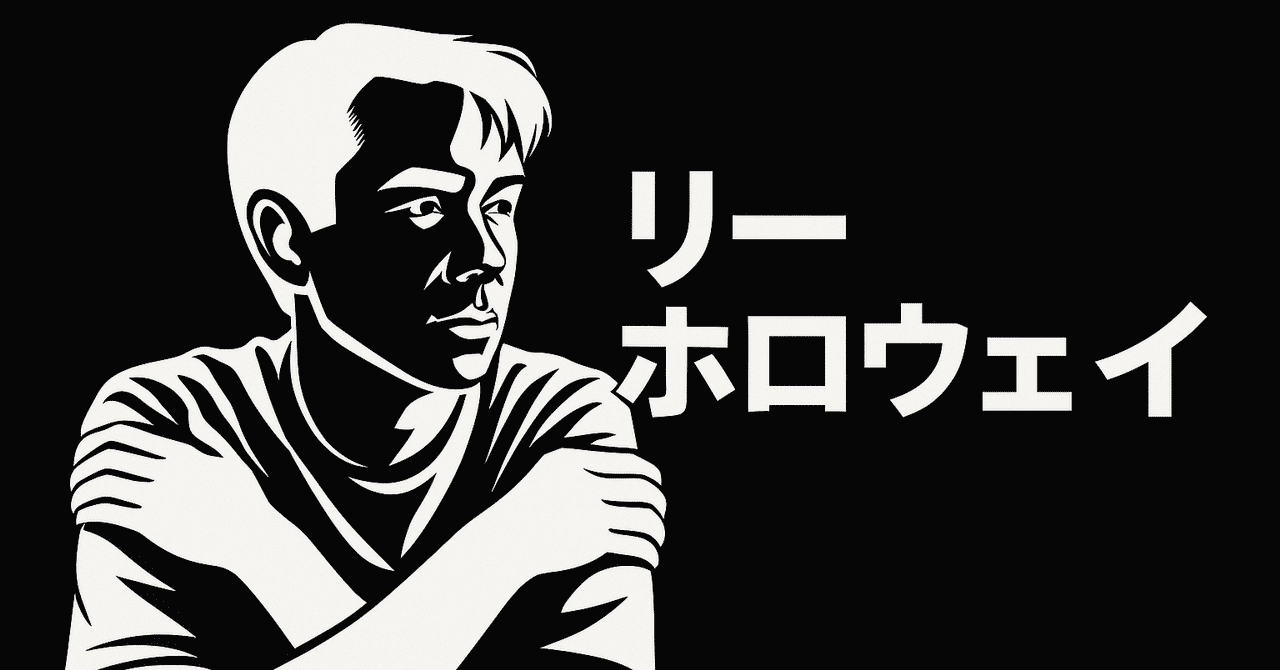
Cloudflare's rise to handling over 10% of the internet's requests wasn't just a business story. It was built on a set of distinctive technical decisions — Anycast, the Cell architecture, a same-IP model — and the person who designed most of that foundation was co-founder and CTO Lee Holloway. But Holloway's career was cut short not by a competitor or a failed pivot, but by a degenerative brain disease that changed his personality and forced him out of the company he helped build.
From Cupertino to Cloudflare's First Prototype
Holloway grew up in Cupertino, the son of an Apple employee, and was programming professionally before he finished high school. He worked at HomeWarehouse.com, a startup acquired by Walmart in 2000, then studied computer science at UC Santa Cruz. There he met Matthew Prince, who was developing anti-spam software. Prince hired Holloway on the spot, and Holloway moved into Prince's basement in Utah, working for food and housing instead of a salary.
That arrangement produced Project Honey Pot, an open-source spam-tracking community that still exists today. When Prince went to Harvard Business School, he refined a plan to turn Honey Pot's data into a service that didn't just monitor threats but blocked them. Holloway, after listening to Prince pitch the idea for an hour, said, "That's interesting, let's do it!" and became the founding engineer of Cloudflare.
The Technical Foundation: Anycast and the Cell Architecture
Holloway built Cloudflare's first prototype and designed the software infrastructure that became the core of the service. Two of his key contributions stand out: the implementation of Anycast networking, which lets multiple data centers share the same IP address and route users to the nearest one, and the Cell architecture, a design that partitions the network into independent units for scalability and fault isolation.
His most famous feat came in 2014, when Cloudflare decided to offer free SSL/TLS to all websites. The day before the deadline, Holloway entered a state of deep focus — hoodie on, headphones on, refusing to speak — and wrote the code in a single night. The result: free encrypted communication for all Cloudflare customers, and the amount of encrypted web traffic on the internet reportedly doubled overnight.
The Onset of Frontotemporal Dementia
Around 2011, Holloway began to change. He was prone to fatigue, would collapse on the floor after work, and lost interest in socializing. His first marriage ended in 2012, with his wife assuming they had grown apart. Colleagues thought he had become selfish after achieving financial freedom. In reality, these were early symptoms of frontotemporal dementia (FTD), a degenerative brain disease that affects personality and behavior.
In January 2015, Holloway underwent heart surgery for a congenital condition, aortic valve regurgitation. The surgery was successful, but his mental state deteriorated further. He became listless, played games on his smartphone during meetings, and stubbornly opposed colleagues' suggestions. Matthew Prince and Michelle Zatlyn held repeated meetings to urge improvement, but nothing worked. Eventually, Holloway was forced to step down from the company he had co-founded.
The full story of Holloway's departure and its aftermath is told in Part 1 of this biography. What's clear is that Cloudflare's technical foundation — the Anycast network, the Cell architecture, the SSL/TLS push — was largely his work, and his absence left a void that the company has been filling ever since.
Hoodie on, headphones on, refusing to speak — he wrote the code that doubled the internet's encrypted traffic in a single night.
Source: note(ノート)
Discussion
0 Comments
Be the first to start the discussion.