Hacking with Claude on a $27 Smart Watch
A staff engineer uses Claude and open-weight models to build a custom watch face for the $27 PineTime open-source smart watch, proving that AI-assisted firmware development is accessible and fun.
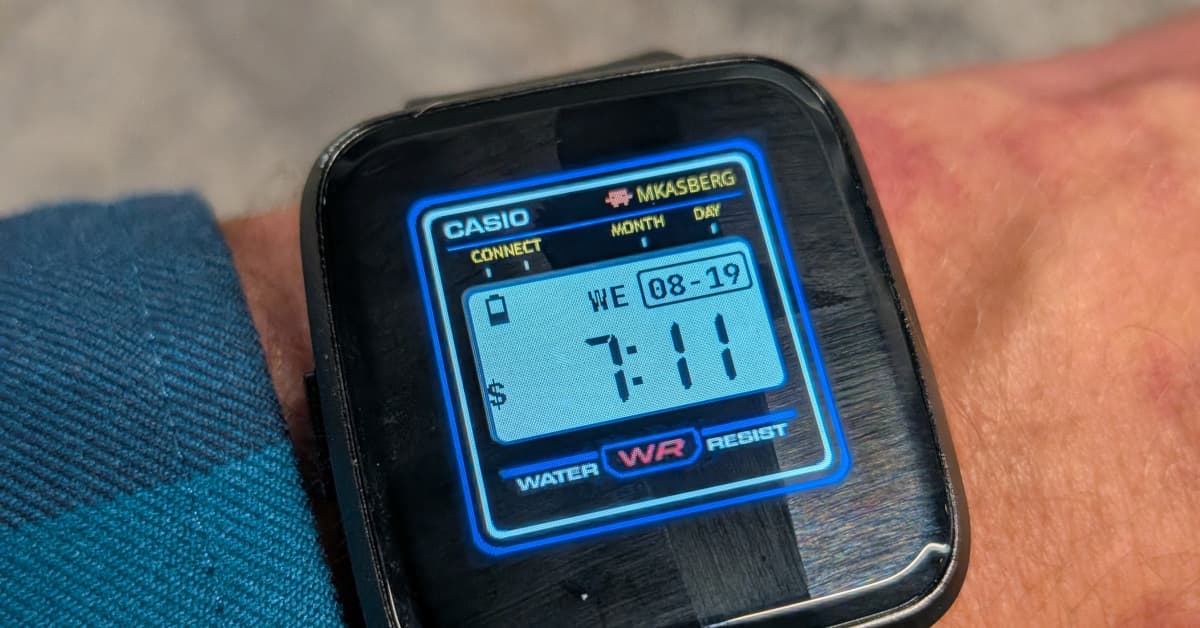
The PineTime is a $27 smart watch that runs open-source firmware. It's been around for a while, but a recent tweet from Steve Ruiz about hacking on ESP32 devices with Claude inspired Mike Kasberg, a staff engineer at Strava, to pull his PineTime out of a drawer and see what an AI coding agent could do with it.
The goal was simple: build a custom watch face, inspired by a Casio-style face that levelsio made for the Apple Watch. The PineTime is a great target for AI-assisted development because it's cheap, well-documented, and has a simulator (InfiniSim) that provides a fast feedback loop. The firmware (InfiniTime) is simple enough that you have to add what you want, which is perfect for experimenting.
Kasberg didn't actually use Claude for most of the work—he used OpenCode with open-weight models like Kimi K3 & K2.6 and DeepSeek v4 Pro & Flash. He started by cloning InfiniSim and getting a build working on Ubuntu. Then he gave the AI a photo of the Casio watch face and asked it to replicate it, using an existing InfiniTime watch face as a starting point.
The first attempt was rough—text elements overlapped and were unreadable because the AI guessed at sizing and positioning. But it was a starting point. Kasberg iterated, fixing one element at a time with specific feedback. He also realized that building static parts of the screen in code was wasteful, so he switched to a fullscreen background image, leaving only the dynamic parts to be programmed.
That worked on the simulator, but on real hardware it exposed the PineTime's limitations: transferring a 240x240 image over Bluetooth took about 10 minutes, and refreshing the screen took 1-2 seconds because the watch can't hold the whole image in memory—it has to stream it from the file system. For a watch face built in a couple of hours, that's acceptable.
Kasberg pushed the code to GitHub and had the AI generate an AGENTS.md file to help others get started. He emphasizes that the low-stakes environment of a hobby project makes it easy to iterate quickly, and that working on firmware for a physical device is rewarding.
The takeaway: AI coding agents are not just for web apps or backend services. They can be effective for embedded and firmware development, especially when the target platform has good documentation and a simulator. The PineTime is a cheap, accessible platform for experimenting with this workflow.
The low-stakes environment (not production code at my day job) makes me feel like I can try whatever I want and iterate quickly, and it's really rewarding to work on firmware for a physical device that I can hold and use when I'm done building it!
Discussion
0 Comments
Be the first to start the discussion.