Plan A: A Blueprint to Delay Superintelligence Until 2040
A detailed scenario for an international deal to slow the AI race, enforce transparency, and avoid catastrophic concentration of power.
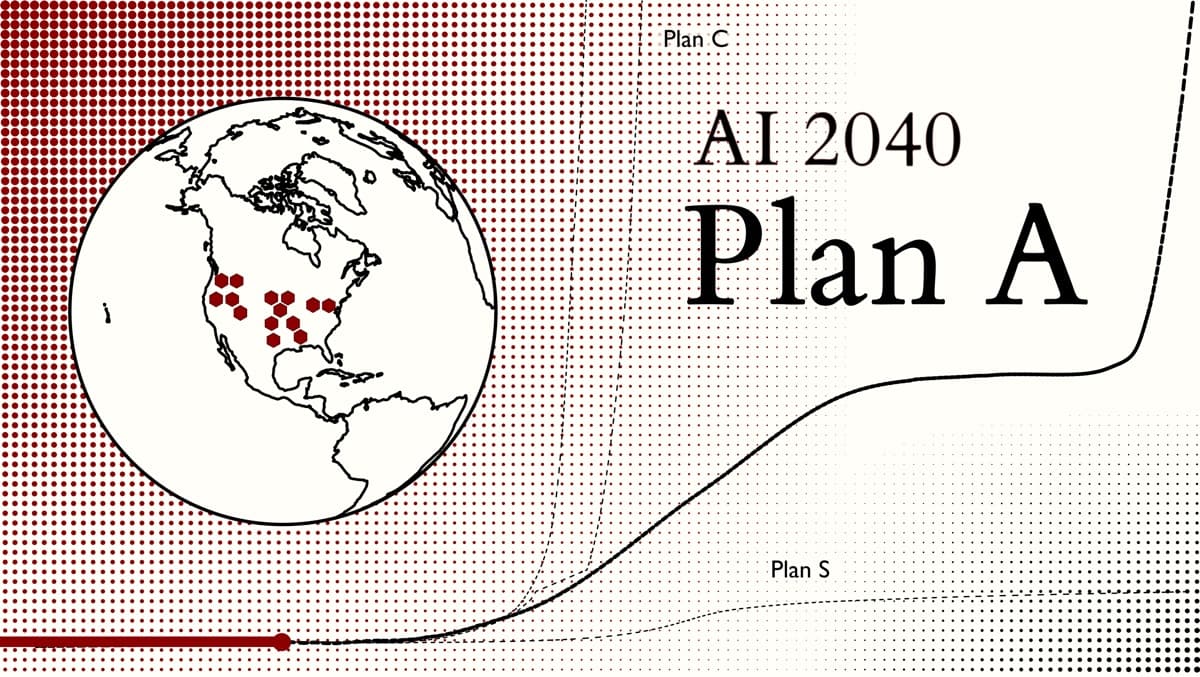
The authors of the AI 2027 scenario are back with a new proposal: Plan A. Instead of racing headlong toward superintelligence, they outline a path where humanity deliberately delays the arrival of generally-superhuman AI until 2040, enforces total research transparency, and allows multiple companies across multiple countries to scale together. The goal is to avoid both extinction and irreversible power concentration.
Why a Delay?
The core argument is that current frontier labs (OpenAI, Anthropic, xAI, Google DeepMind) are on track to build smarter-than-human AI within 1–10 years, with no adequate plan for control. The authors believe that whoever wins that race will have a brief window of absolute power—a situation that could easily lead to global dictatorship or extinction. Plan A is their positive alternative: a coordinated international agreement that slows the timeline enough to build robust guardrails.
The Timeline
- 2029: US and China agree to avoid a reckless race.
- 2030: Without the deal, fully automated AI R&D would trigger superintelligence by year-end. The deal prevents this.
- 2030–2035: Scale AI to top-human-expert level, maintaining human control.
- 2035: Pause at that level to ensure safety.
- 2040: Unpause and scale to superintelligence—hence the title AI 2040.
Transparency and Verification
The proposal hinges on total research transparency for all AI R&D, so nations can understand what's happening and enforce guardrails. A companion verification plan outlines how to detect cheating. The result is a regime of “mutually assured compute destruction”—no single actor can secretly sprint ahead.
Not a Prediction, a Recommendation
The authors stress that Plan A is not their best guess of what will happen. It's a vehicle to stress-test policy ideas. They contrast it with four alternative plans (B, C, D, S) representing other possible US responses. The exercise is meant to force proponents of any AI policy to write down a concrete, plausible scenario in which it succeeds—a practice they call “scenario scrutiny.”
“Plans are worthless, but planning is everything.” — Dwight D. Eisenhower
Why This Matters Now
The article argues that most AI policy proposals collapse under scenario scrutiny—they sound good in the abstract but fall apart when you try to imagine them actually working. By publishing their own detailed scenario, the authors hope to raise the bar for the whole debate. Whether or not you buy the specifics, the exercise of forcing concrete timelines and verification mechanisms is valuable for engineers and policymakers alike.
Source: AI 2040
Discussion
0 Comments
Be the first to start the discussion.