Intel's Core 5 320 Beats Apple Silicon on Efficiency — x86 Finally Catches Up
Jeff Geerling's benchmarks show Dell's XPS 13 with Intel's Core 5 320 hitting 6.21 Gflops/W, beating the MacBook Neo's 5.38. The efficiency crown is no longer ARM-only.
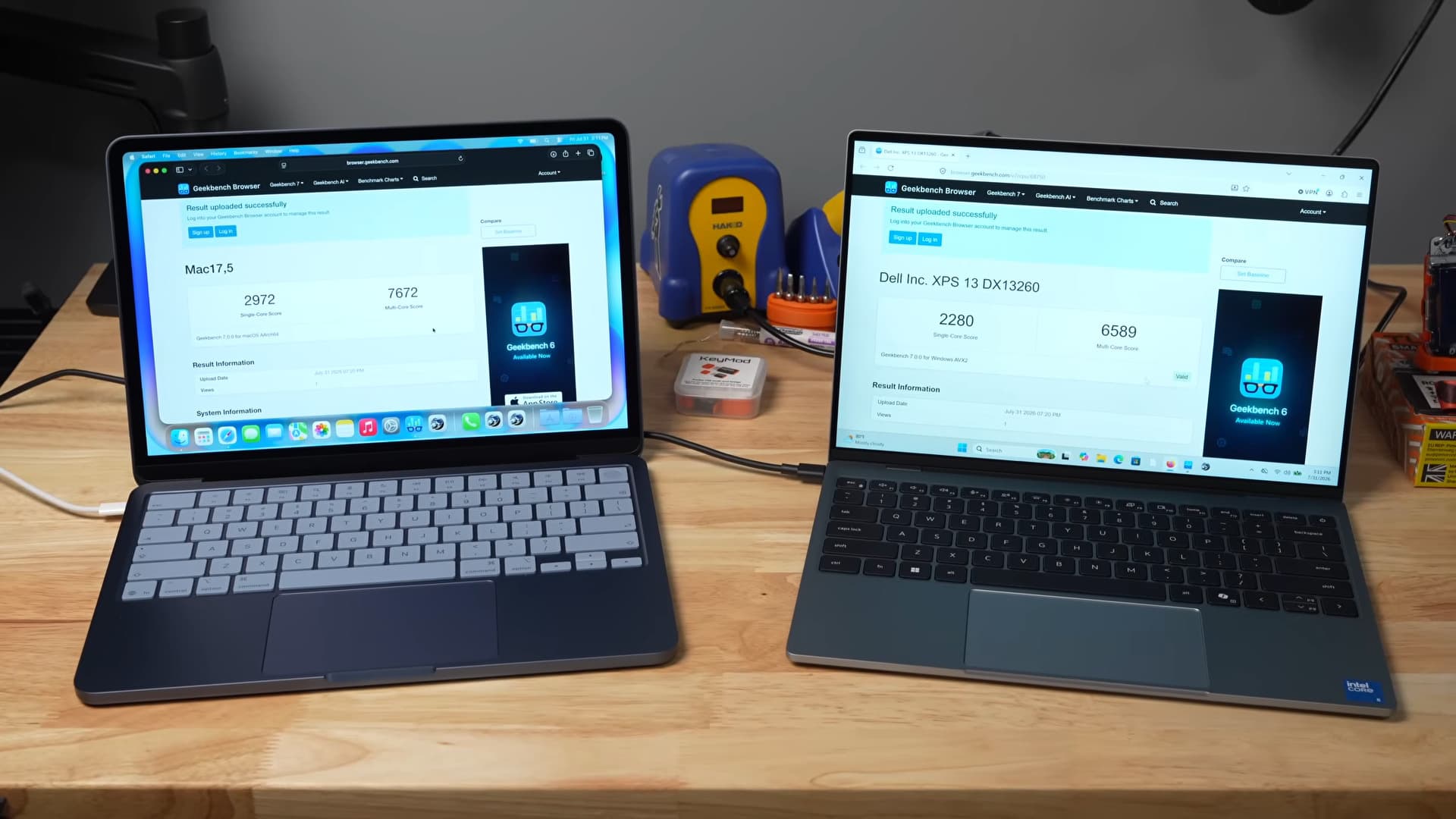
For years, the conventional wisdom has been that ARM chips sip power while x86 guzzles it. That narrative just took a hit. In a new video, Jeff Geerling pits a Dell XPS 13 powered by Intel's Core 5 320 against a MacBook Neo (Apple Silicon), and the results are surprising — the Dell wins on raw efficiency.
Geerling ran his version of the Top500 benchmark, the same HPL Linpack test used for supercomputers. The MacBook Neo delivered 57.012 Gflops at 10.6W, for 5.38 Gflops/W. The Dell, meanwhile, cranked out 127.91 Gflops at 20.6W, for 6.21 Gflops/W. That's a 15% efficiency advantage for Intel — and it's not a fluke. The Dell also beats both M4 and M3 Mac Studios, only losing to the M4 Mac Mini at 7.57 Gflops/W.
Even at idle or during web browsing, the XPS matches the MacBook sip for sip. This isn't just a peak-performance story; it's about day-to-day efficiency too.
Geerling's data adds weight to the argument that ARM's power advantage has more to do with the silicon itself than the instruction set. The Core 5 320, built on Intel's latest process, proves x86 can be just as efficient when designed right.
The benchmarks are all up on GitHub, so you can dig into the numbers yourself. The Mac still wins on iGPU performance, sound, and not shipping Windows, while the Dell gets points for Linux compatibility and a backlit keyboard. But for engineers who care about performance per watt, this is a significant shift.
The efficiency crown is no longer ARM-only — Intel's Core 5 320 proves x86 can sip power too.
| Metric | Dell XPS 13 | MacBook Neo |
|---|---|---|
| Gflops | 127.91 | 57.012 |
| Power (W) | 20.6 | 10.6 |
| Gflops/W | 6.21 | 5.38 |
Source: Hackaday
Discussion
0 Comments
Be the first to start the discussion.