NASA's Roman Space Telescope Is Done Building—Launch Set for August 2026
The Nancy Grace Roman Space Telescope is fully assembled and slated to launch on a Falcon Heavy in August 2026. With a field of view 100x Hubble's, it's built to tackle dark energy, exoplanet census, and infrared surveys.
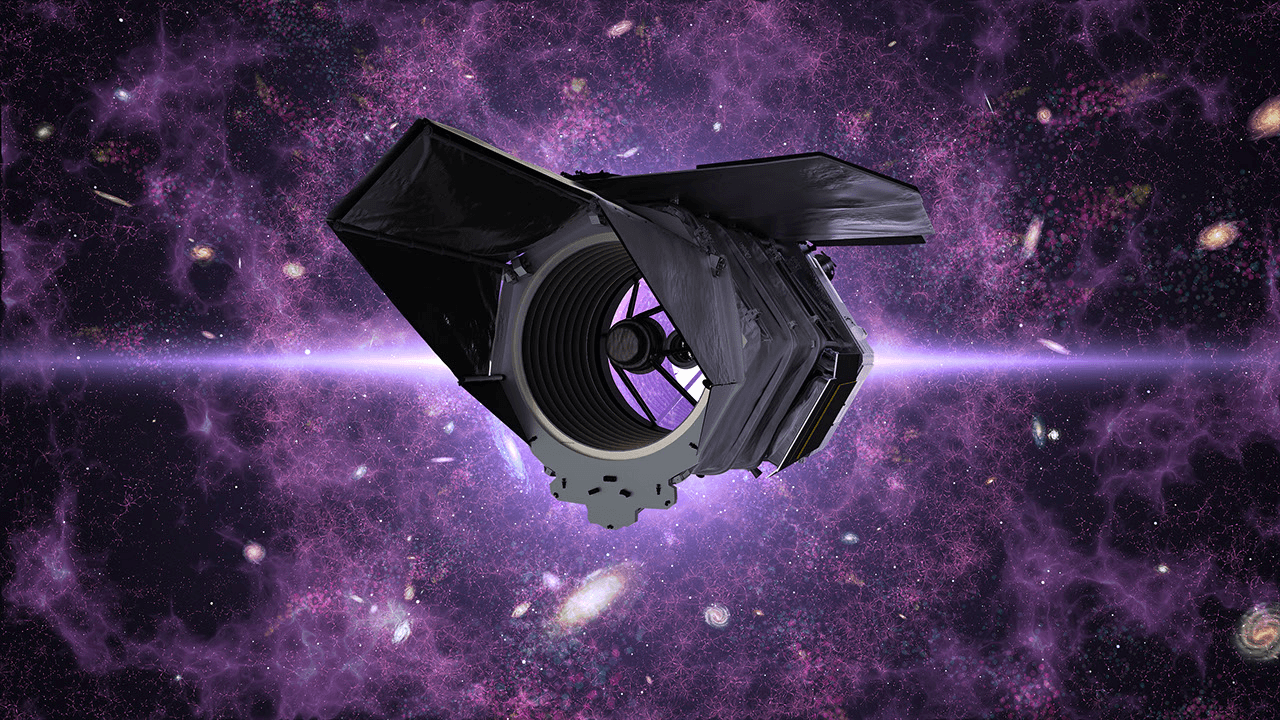
NASA has finished assembling the Nancy Grace Roman Space Telescope, and the observatory is now on the pad at Kennedy Space Center, ready for a launch window that opens August 30, 2026, at 07:26 EDT (11:26 UTC) aboard a SpaceX Falcon Heavy. The mission, named after NASA's first chief astronomer, is designed to answer some of the biggest open questions in cosmology and exoplanet science.
Roman's headline feature is its field of view—at least 100 times larger than Hubble's. That means it can survey the sky at a pace that would take Hubble centuries. Over its lifetime, Roman is expected to measure light from roughly a billion galaxies, which will feed into dark energy and dark matter studies. The telescope also carries a coronagraph instrument to block starlight and directly image exoplanets and planet-forming disks, complementing the transit and radial velocity methods used by other missions.
The mission's science goals are organized around three pillars: dark energy, exoplanets, and infrared astrophysics. Roman will complete a statistical census of planetary systems in the Milky Way, using microlensing to find planets that other surveys miss. Its infrared capabilities will also probe the early universe, galaxy evolution, and the distribution of matter on cosmic scales.
Construction is complete, and the spacecraft has already arrived at the launch pad. NASA has given the mission a 'go' for launch, with mission briefings scheduled. The launch window is set for August 30, 2026, from Launch Complex 39A at Kennedy Space Center.
For engineers, Roman represents a shift in how space-based surveys are done: it's not just a bigger Hubble, but a survey machine designed to produce massive datasets that will be public and accessible to the whole astronomical community. That data pipeline is going to be a major engineering challenge in itself.
Roman's field of view is at least 100 times larger than Hubble's, potentially measuring light from a billion galaxies in its lifetime.
| Feature | Roman | Hubble | JWST |
|---|---|---|---|
| Field of view | 100x Hubble | Baseline | Small |
| Primary mirror | 2.4m | 2.4m | 6.5m |
| Wavelength | Visible to infrared | Visible to near-IR | Infrared |
| Launch date | Aug 2026 | 1990 | 2021 |
| Primary science | Dark energy, exoplanets | Deep fields, UV | Early universe, atmospheres |
Source: NASA Science
Discussion
0 Comments
Be the first to start the discussion.