New Colobus Monkey Species Discovered in Congo: A Rare Primate Find
Scientists have identified a new species of Colobus monkey, Likweli, in the Congo Basin, marking only the fifth new African monkey species discovered in 75 years.
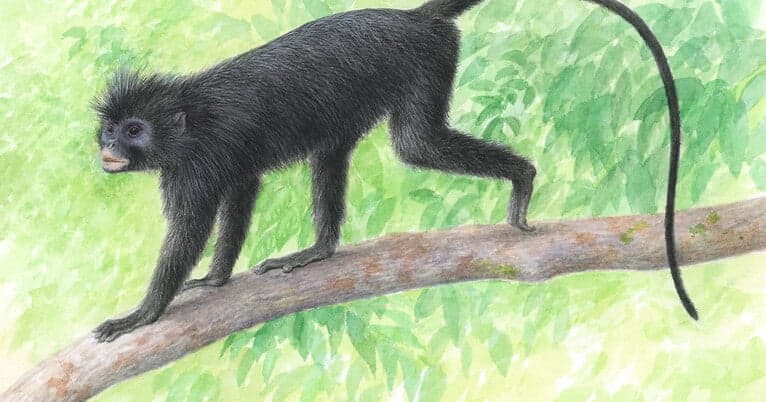
A team of researchers, including scientists from Yale, has described a new species of Colobus monkey called Likweli (Colobus congoensis) in the Democratic Republic of Congo. This is the fifth new African monkey species discovered in the last 75 years, a rare event in primatology.
The monkey is small, black, and lives high in the forest canopy, making it difficult to spot. Its most distinctive feature is orange-cream patches around its mouth and nose. The species was identified through a combination of physical traits, genetic analysis, and vocalization patterns, all pointing to a distinct lineage.
“Our team evaluated multiple datasets that all reached the same conclusion: Likweli is a distinct species of Colobus monkey we haven’t seen before,” said Julia Arenson, a postdoctoral fellow at Yale and coauthor of the study. The findings were published in PLOS One on July 15.
The researchers observed Likweli in Lomami National Park and its buffer zone, covering about 1,700 square kilometers. From 2018 to 2022, they recorded 114 sightings, typically in small groups of around six individuals. The species is so cryptic that only 8 out of 52 local villages surveyed had knowledge of it.
Genetic analysis estimates that Likweli’s most recent common ancestor with its sister species, Colobus satanas, lived between 4.7 and 5.8 million years ago. This represents the deepest split among Colobus monkeys, further confirming its distinct status. The two species are separated by at least 1,200 kilometers.
The researchers recommend that Likweli be classified as endangered due to its limited range, small population, and threats from hunting and habitat encroachment. “This is a rare discovery with significant conservation implications,” said Eric Sargis, a curator at the Yale Peabody Museum and coauthor.
Specimens confiscated from hunters in 2021 are now housed at the Yale Peabody Museum, providing a physical record for future study. The discovery underscores the biodiversity of Lomami National Park and the importance of conservation efforts in the region.
Source: Yale News
Discussion
0 Comments
Be the first to start the discussion.